Project Minerva
Livelihood Generation through Embroidery and Related Activities
Impact Numbers
About the Project
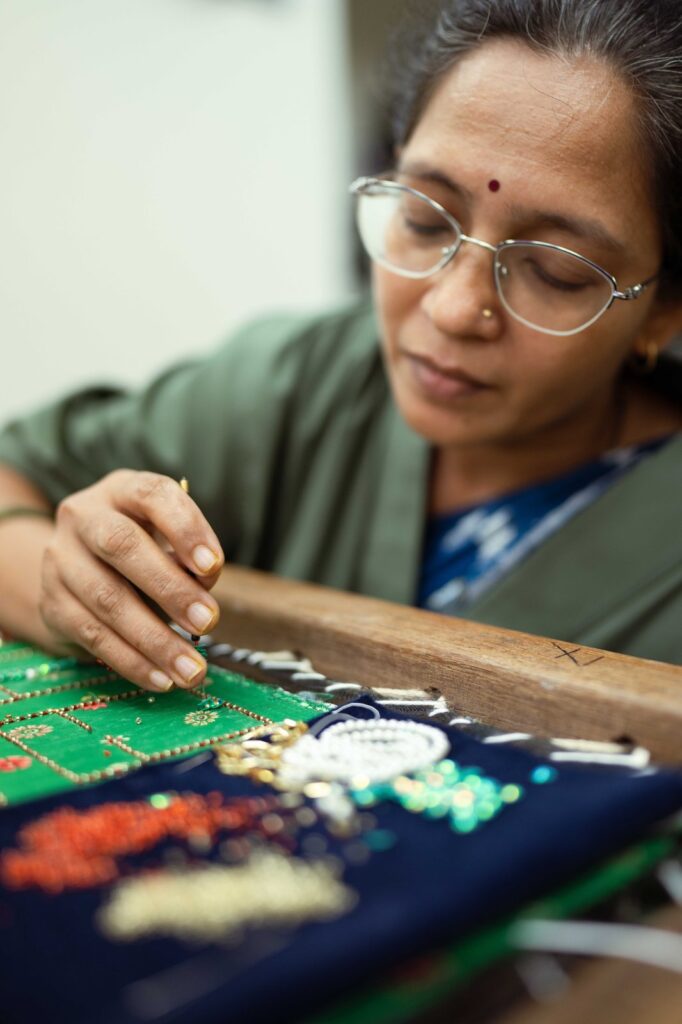
The embroidery and garment embellishment industry has traditionally been dominated by male karigars, who often have greater access to advanced technical skills, industry networks and higher-value work opportunities. Despite women’s involvement in various forms of traditional needlework and handcraft, their participation in specialised, commercially demanded embroidery techniques remains limited. This is often due to a lack of structured training opportunities, access to appropriate infrastructure, exposure to industry requirements and pathways to formal livelihood opportunities.
Recognising this gap, Project Minerva was initiated to equip women with advanced embroidery skills and related craft techniques that respond to evolving industry demands. The project seeks to address the disparity in access to skilled work by creating opportunities for women to enter and participate in a traditionally male-dominated segment of the textile and garment industry.
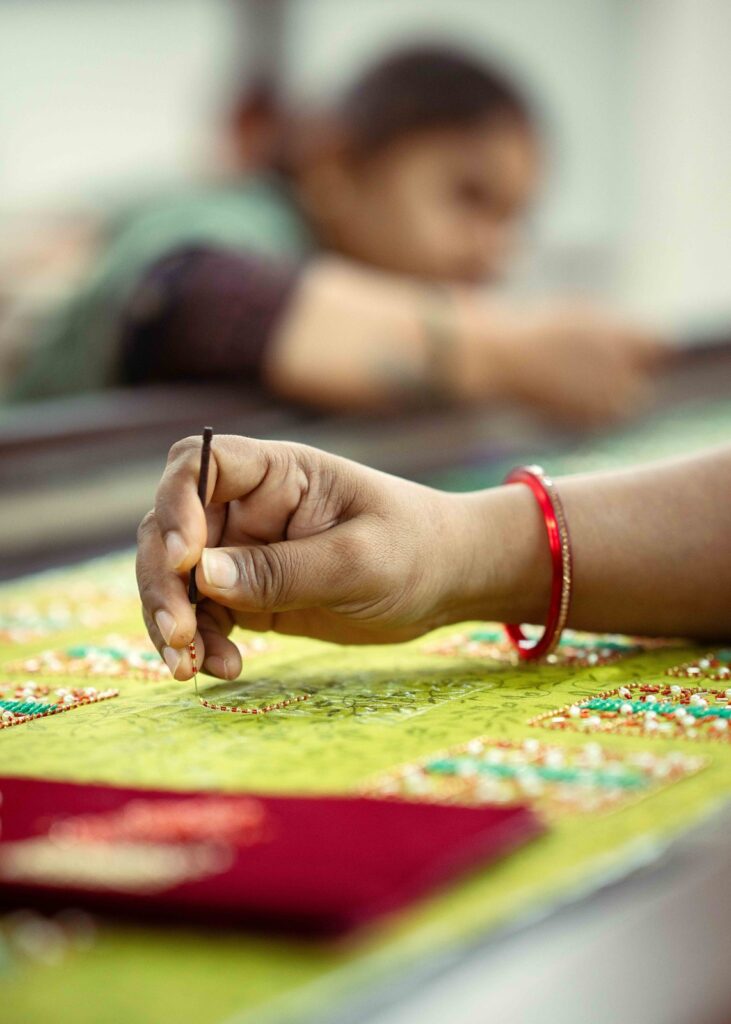
Through structured skill development, access to necessary infrastructure, hands-on practical training and capacity-building support, Minerva enables female artisans to strengthen their technical expertise, improve the quality of their work and develop the confidence to undertake more specialised assignments. Beyond skill enhancement, the project aims to expand women’s access to market-oriented work opportunities, improve their earning potential and establish pathways towards sustainable livelihoods.
By investing in women’s technical capabilities and creating an enabling environment for their participation in the embroidery sector, Project Minerva strives to promote gender equity, strengthen economic independence and recognise women as skilled contributors to the textile and garment industry.